In the fast-paced business landscape of 2026, agility is no longer just a buzzword; it is a strict requirement for survival. Companies are adopting AI, expanding remote teams, and scaling operations at breakneck speeds. Yet, many organizations respond to these modern challenges by layering on more processes, more checks, and more software.
Ironically, these well-intentioned measures often exacerbate inefficiency rather than alleviate it. As Taiichi Ohno, the father of the Toyota Production System, famously noted, the goal is to reduce the timeline from customer order to cash collection by removing non-value-added waste. Today, mastering business simplification strategies is the ultimate competitive advantage.
This comprehensive guide will show you how to streamline operations, reduce friction, and implement lean workflows without throwing your team into chaos. To prove these concepts, we will anchor our strategies in a detailed, real-world case study of a mid-sized company that successfully transformed its operations.
The Hidden Costs of Complexity in 2026
Complexity is never neutral; it always carries a hidden tax on your organization. When you add unnecessary steps, redundant approvals, or disjointed systems, you create a ripple effect of inefficiencies that touch every department.
Why Growth Breeds Friction
As businesses expand, they naturally add new products, services, and teams. While these additions drive revenue, they also introduce thick layers of bureaucratic clutter. Suddenly, decisions take longer, communication gets murky, and your team spends more time managing systems than serving customers.
The Automation Trap
A massive mistake companies make in 2026 is attempting to automate a broken process. Automating a complex, wasteful workflow simply means you are speeding up the production of errors. You must simplify and error-proof your operations before introducing advanced business process automation.

Consider the severe impacts of unchecked complexity on your bottom line:
- Employee Burnout: Overly complicated processes frustrate top talent, leading to disengagement and high turnover rates.
- Customer Churn: Modern buyers demand instant, frictionless experiences and will abandon brands that lag.
- Inflated Costs: Every extra step in a process delays outcomes and drains valuable financial resources.
Case Study: How NexusFlow Cut Turnaround Time by 68%
To understand how to simplify business processes without creating chaos, let us examine NexusFlow, a rapidly growing B2B SaaS company. By early 2025, NexusFlow had scaled to 200 employees but was drowning in operational chaos.
The Challenge: Drowning in Approvals and Silos
NexusFlow’s client onboarding process took an average of 14 days. Their procurement process required five separate managerial approvals just to purchase a $50 software license. The executive team realized that their legacy systems were stifling growth and causing massive employee frustration.
The Methodology: The 5-S Framework
Instead of immediately buying new AI tools, the operations team adopted the 5-S Method to fix one workflow at a time. This framework focuses on making work visible, removing friction, and scaling intelligently.
- See: They mapped the current state using smart flowcharts to visualize every bottleneck.
- Streamline: They ruthlessly eliminated redundant approval layers and handoffs.
- Standardize: They created clear, one-page process documents for all repeating tasks.
- Systemize: They centralized all tasks, files, and communications into a single all-in-one platform.
- Scale: Only after the process was lean did they automate the repetitive follow-ups.
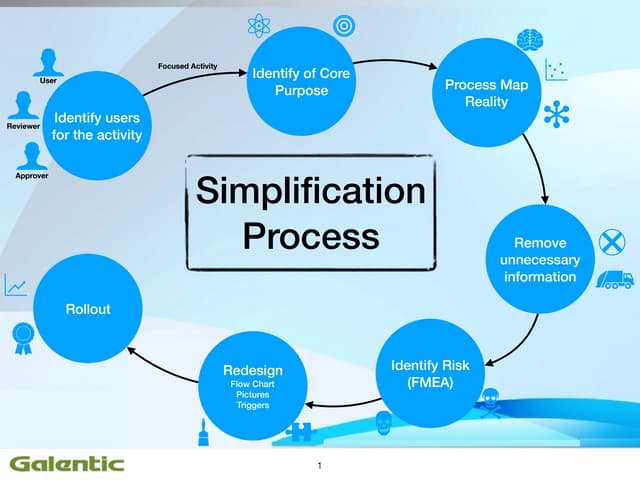
Execution and Real-World Metrics
The execution took 90 days, rolling out department by department to avoid overwhelming the staff. They pushed decision-making authority closer to the execution level, reducing the software approval chain from five steps to just two.
The Results:
- Onboarding Time: Dropped from 14 days to just 4.5 days (a 68% reduction).
- Operational Growth: Achieved 300% revenue growth over the next year without proportionally increasing headcount.
- Employee Satisfaction: Internal Net Promoter Scores (eNPS) rose by 42 points as staff reported significantly less daily friction.
Step-by-Step Guide to Simplifying Workflows (Without the Chaos)
Transforming your own organization requires a deliberate, phased approach. Here is how to implement effective workflow optimization without disrupting daily operations.
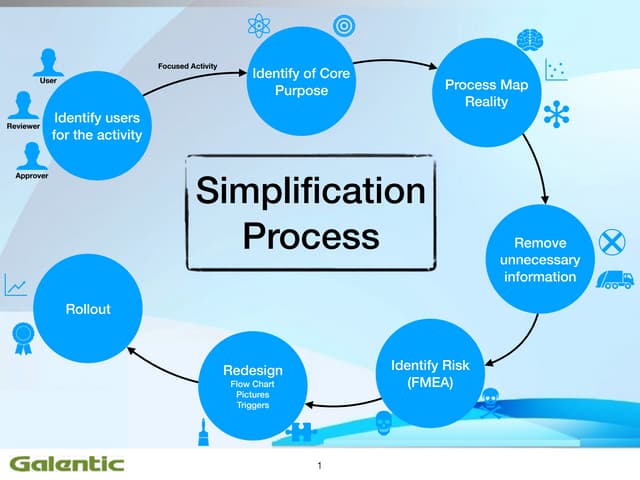
1. Map and Visualize the Current State
You cannot fix what you cannot see. Begin by visualizing your current workflows using tools like a Value Stream Map or smart flowcharts. Visual information is processed by the human brain far more quickly than dense text documents.
Smart flowcharts instantly highlight bottlenecks, superfluous steps, and critical decision points. This shifts your team from tedious reading to quick seeing, enabling highly effective collaborative problem-solving.
2. Eliminate Waste Before Automating
Channel the concept of Poka Yoke (error-proofing) to design processes that prevent mistakes natively. Remove any steps that do not directly add value to the final product or customer experience.
Standardize the work to create clear, repeatable instructions that everyone can follow. Once the waste is gone, you can safely introduce automation to handle the remaining repetitive tasks.
3. Clarify Roles and Push Decisions Down
Ambiguity is the enemy of speed. Ensure that each team member understands exactly what tasks they control and how their work fits into the bigger picture.
Set up simple decision filters and visible tracking systems. When teams can solve problems without waiting for top-down approval, your entire organization becomes vastly more agile.
4. Implement Smart Flowcharts and Async Work
Transition away from endless, time-wasting sync meetings by adopting an asynchronous work model. Utilize project management tools that support async communication, document sharing, and independent work.
This allows your employees to maintain deep focus while still meeting strict deadlines. An all-in-one platform centralizes your business processes, reduces manual data entry, and secures data accuracy across the board.
Tailoring Simplification by Business Stage
Business simplification strategies are not one-size-fits-all. The core problem of work taking longer than it should affects everyone, but the solution must adapt to your company's current stage of growth.
Startups: Speed Over Perfection
Startups move incredibly fast but often break things internally due to a heavy dependency on founders. The priority here is establishing lightweight processes and clear ownership.
- Rule of Thumb: Stick to one-page process docs only.
- Approvals: Allow no more than one approval layer for routine tasks.
- Automation: Only automate a task after it has been repeated manually 20+ times.
MSMEs: Reducing Key-Person Dependency
Small and medium enterprises face immense compliance pressure and limited manpower. For MSMEs, simplification is entirely about reducing dependency on specific individuals.
- The Golden Rule: If a process breaks when one person is absent, it is not a process; it is a massive risk.
- Action: Implement fixed monthly checklists for HR and standard invoice workflows for accounting to ensure continuity.
Enterprises: Removing Friction While Keeping Control
Large enterprises struggle with heavily siloed departments, slow decision cycles, and too many approvals. The goal is to remove friction without losing vital corporate governance.
- Shift: Move from hierarchy-based approvals to value-based approvals.
- Reporting: Replace monthly manual reports with real-time, automated dashboards.
- Best Practice: Embed compliance checks directly into the workflow software rather than relying on separate auditing teams.
Mistakes Made and Lessons Learned
Even with the best intentions, process simplification can fail if executed poorly. Reviewing common pitfalls will help you avoid creating the very chaos you are trying to eliminate.
The "Big Bang" Rollout Error
Many leaders attempt to change every company process overnight. This massive shock to the system causes severe employee resistance and operational paralysis. Lesson learned: Roll out changes iteratively, fixing one workflow at a time using the 5-S method.
Ignoring Employee Feedback
Executives often design streamlined processes in a boardroom without consulting the frontline workers. If the people doing the work find the new process confusing, they will simply revert to their old habits. Lesson learned: Foster open communication and encourage feedback from employees at all levels to identify hidden complexities.
Frequently Asked Questions (FAQ)
1. What is the first step to simplifying a complex business process?
The first step is always to map the current state. Use visual tools like smart flowcharts or Value Stream Maps to document every single step, handoff, and approval. You must make the invisible friction visible before you can eliminate it.
2. Why shouldn't I just use AI to automate my current workflows?
Automating a broken or overly complex process simply speeds up the production of errors and waste. You must simplify, standardize, and error-proof the workflow manually before applying AI or automation tools to ensure you are scaling efficiency, not chaos.
3. How do I get my team to adopt new, simplified processes?
People do not resist change; they resist confusion. Involve your team in the mapping process, clearly explain how the new process makes their daily jobs easier, and provide comprehensive, one-page training documents to inspire confidence.
4. How often should we review and simplify our business processes?
Process optimization is not a one-time event. In the dynamic environment of 2026, you should conduct a lightweight workflow audit every quarter, and a deep-dive simplification review annually to ensure legacy steps haven't quietly crept back into your operations.
Conclusion: The Future is Lean
Simplifying business processes is not just a strategy for survival; it is the ultimate strategy for sustainable growth. As we navigate the complexities of 2026, the companies that win will not be those with the most convoluted systems, but those with the clearest, most streamlined operations.
By mapping your workflows, eliminating waste, clarifying roles, and embracing asynchronous collaboration, you can drastically reduce turnaround times. Remember the lesson of NexusFlow: true operational efficiency comes from cutting through the noise to focus strictly on what drives value. Start small, simplify relentlessly, and watch your business scale without the chaos.
References
- LinkedIn — Simplifying Processes: A Timeless Necessity in Modern Business, 2025
- Forbes — Mastering the Art of Simplifying Complex Business Issues, 2025
- Creately Blog — How to Simplify Complex Workflows with Smart Flowcharts, 2025
- Klaxoon — 3 Steps to Drastically Simplify Your Company Processes, 2025
- Bitrix24 — Simplifying Complex Workflows: Tools and Techniques for Small Teams, 2026
- Viproinfoline — How to Simplify Business Processes for Faster Turnaround, 2026