Running a small business in 2026 often feels like an endless balancing act. You are constantly juggling customer expectations, rising operational costs, and the intense pressure to scale. But what if you could simplify your workflows, save time, and still deliver exceptional service?
This is where lean operations for small business come into play. Efficiency isn’t just about cutting costs; it’s about maximizing impact and creating sustainable growth. By adopting a lean mindset, smaller enterprises can punch above their weight and turn their agility into a massive competitive advantage.
In this comprehensive guide, we will explore how to implement lean management principles through a detailed, real-world case study. We will break down the methodology, execution, and remarkable results achieved by a small business that scaled efficiently. Let’s dive into the strategies that are defining SMB growth in 2026.
The 2026 SMB Landscape: Why Lean Operations Are No Longer Optional
The Shift from Survival to Scalability
In the competitive landscape of 2026, adopting lean operations is not merely a trend but a strategic imperative. Small businesses are facing unique economic pressures, from supply chain fluctuations to the rising cost of specialized talent. Surviving requires agility, but thriving requires absolute operational excellence.
Lean workflows empower smaller enterprises to eliminate waste and focus strictly on value creation. According to recent SMB growth patterns, businesses that integrate lean principles with modern technology are seeing up to 300% faster scaling compared to their traditional counterparts.
AI and Automation in Lean Workflows
The definition of lean has evolved significantly over the last decade. Today, AI adoption and automation are deeply intertwined with lean methodologies. Tools like AI-powered schedulers, predictive inventory software, and automated CRM systems free your team to focus on high-value tasks.
By merging traditional lean thinking with 2026’s technological advancements, small businesses can achieve unprecedented efficiency. This convergence of operational design and smart spending is exactly what separates market leaders from those struggling to keep up.
Case Study: Transforming "Apex Tech Repair" with Lean Methodologies
To truly understand the power of lean operations for small business, let’s look at a realistic case study. Meet "Apex Tech Repair," a mid-sized electronics and appliance repair shop struggling to manage its rapid post-pandemic growth.
The Challenge: Bottlenecks, Bloat, and Burnout
By early 2025, Apex Tech Repair was facing a severe operational crisis. Despite high market demand, their profit margins were shrinking due to high labor costs, scheduling delays, and severe inventory mismanagement. Technicians were spending nearly 30% of their day searching for parts or waiting for manual schedule updates.
Customer satisfaction scores had dropped to 68%, and employee turnover was at an all-time high. The owner, Sarah, realized that simply hiring more people wasn't solving the underlying problem. The core issue was a bloated, inefficient operational workflow that lacked standardization and clear value streams.
The Methodology: Applying the 5 Principles of Lean
Sarah decided to implement a strict lean management framework based on the Toyota Production System, adapted for modern service businesses. She focused on the five core principles: identifying value, mapping the value stream, creating flow, establishing pull systems, and seeking perfection.
Instead of cutting corners or slashing budgets, she reimagined her operations from the ground up. The primary goal was to eliminate Muda (waste) in all forms, including human error, extended downtimes, and unnecessary administrative steps.
Execution: A 90-Day Lean Transformation Timeline
Days 1-30: Value Stream Mapping and Tech Integration
Sarah mapped out every single step of the customer journey, from the initial service call to the final repair handoff. She identified massive bottlenecks in scheduling and introduced an AI scheduling tool that matched technicians’ availability to customer requests in real time. This immediately reduced downtime and optimized routing.
Days 31-60: Inventory Optimization and 5S Workplace Organization
Next, she tackled the chaotic parts room. Using the 5S methodology (Sort, Set in order, Shine, Standardize, Sustain), she completely reorganized the physical and digital inventory. She implemented just-in-time (JIT) inventory software to track trends, ensuring they only stocked high-turnover parts while reducing dead stock by 40%.
Days 61-90: Culture Shift and Continuous Improvement (Kaizen)
Finally, Sarah focused on her most valuable asset: her team. She instituted weekly Kaizen (continuous improvement) meetings, dedicating 10% of work hours specifically to process refinement. Technicians were empowered to identify problems and suggest solutions, fundamentally shifting the company culture from reactive to proactive.
The Results: Metrics That Matter
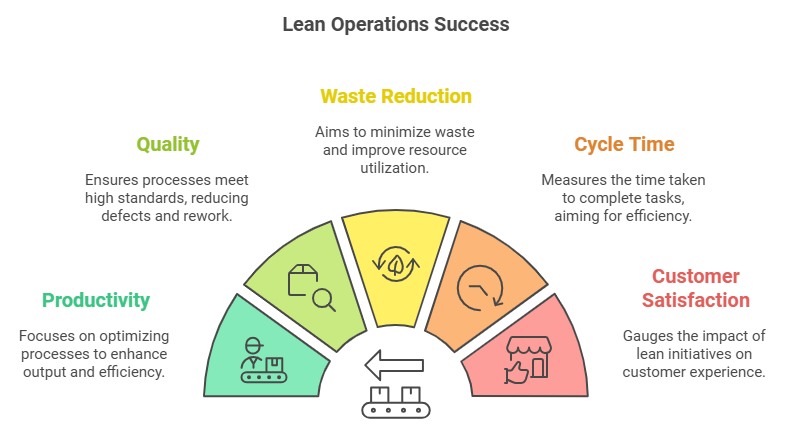
The results of this 90-day lean transformation were nothing short of game-changing. By the end of the third quarter in 2026, Apex Tech Repair reported remarkable improvements across all key performance indicators.
- Revenue Growth: Achieved a 45% increase in quarterly revenue without adding new headcount.
- Cost Reduction: Operational costs dropped by 28%, primarily through optimized inventory and reduced overtime.
- Customer Satisfaction: Net Promoter Score (NPS) soared from a struggling 68% to an exceptional 94%.
- Turnaround Time: Average repair turnaround time decreased from 5 days to just 1.5 days.
Sarah’s story is definitive proof that even small, targeted improvements can lead to massive, scalable wins in the modern economy.
Core Lean Principles for Small Businesses (And How to Apply Them)
You don't need a massive manufacturing plant to benefit from lean thinking. Here is how you can apply the foundational principles of lean to your own small business operations in 2026.
1. Define Customer Value
Everything in lean starts with the customer. You must identify what your customers truly value and are willing to pay for. If a process doesn't directly contribute to that value, it is a prime candidate for elimination.
For example, if your bakery's customers value fresh, same-day deliveries, prioritize streamlining your delivery routes. Don't waste resources expanding a complex pastry selection that your target demographic isn't actually asking for.
2. Map the Value Stream
Map the entire process of delivering your product or service from start to finish. Look at each step to identify bottlenecks, delays, or redundant managerial approvals. Value Stream Mapping (VSM) helps ensure that every single action adds tangible value to the end user.
3. Create Flow and Pull Systems
Facilitate smooth workflows in tight sequences to reduce delays and idle time. A pull system means you only produce or order what is needed, exactly when it is needed. This prevents overproduction and keeps your cash flow healthy by not tying up capital in excess inventory.
4. Eliminate Waste (Muda)
Waste comes in many forms, traditionally categorized into eight distinct types. These include overproduction, waiting times, unnecessary transport, over-processing, excess inventory, unnecessary motion, product defects, and non-utilized talent. Regularly audit your operations to hunt down these wastes and eradicate them.
5. Pursue Continuous Improvement (Kaizen)
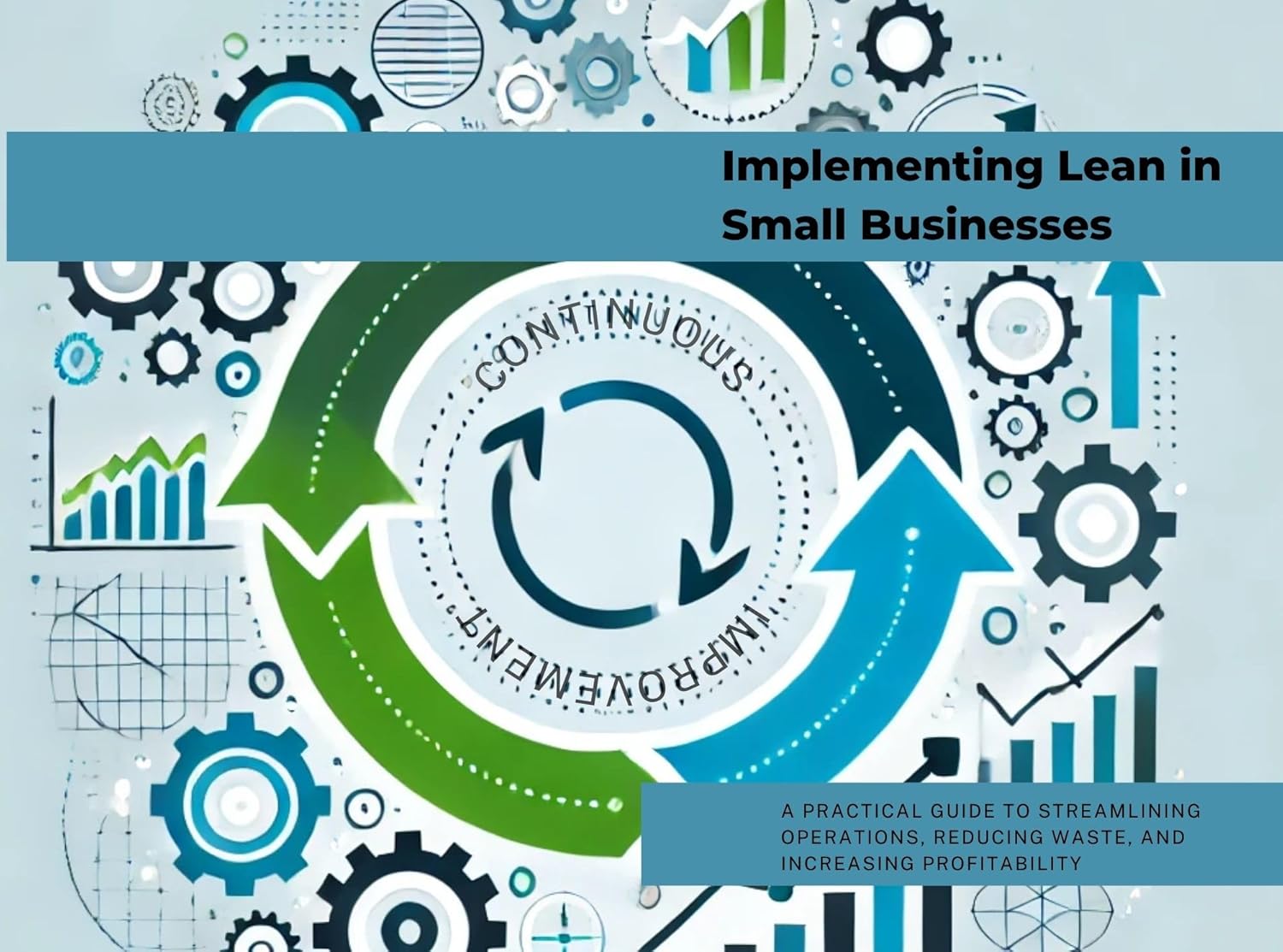
Lean is not a one-time project; it is a permanent cultural shift. Aim for perfection by continuously improving processes and incentivizing innovation at every level. Encourage your team to dedicate time each month specifically for process improvement and problem-solving.
Common Mistakes and Lessons Learned in Lean Implementation
While the benefits of lean operations are vast, the journey is rarely without pitfalls. Understanding common mistakes can save your small business valuable time, money, and morale.
Mistake 1: Treating Lean as a Cost-Cutting Exercise
Many owners mistakenly view lean purely as a way to slash budgets and reduce headcount. This creates fear, resentment, and resistance among employees. True lean management is about value maximization and making work easier, not just cheaper.
Mistake 2: Ignoring Company Culture
You cannot implement lean from the top down without genuine buy-in from the people doing the daily work. If your team feels that their input doesn't matter, your continuous improvement initiatives will quickly stall. People empowerment is a core tenet of lean that cannot be ignored.
Lesson Learned: Start Small and Stay Agile
Don't try to overhaul your entire business in a single weekend. Start with one high-impact bottleneck, apply lean tools, measure the results, and then scale. Regularly review your processes and stay agile enough to pivot when market conditions change.
Future Outlook: Lean Operations in a Post-2026 World
As we look toward the future, the intersection of lean management and emerging technologies will only grow stronger. Small businesses that master this synergy will undoubtedly dominate their local and niche markets.
We expect to see a massive rise in predictive lean operations, where AI anticipates waste before it actually occurs. From automated supply chain adjustments to AI-driven quality control, the tools available to SMBs in 2026 are incredibly powerful and accessible.
Furthermore, as remote and hybrid work models become permanent fixtures, lean principles will be vital for managing distributed teams. Standardized digital workflows and clear value streams will ensure that remote employees remain aligned, productive, and focused on customer value.
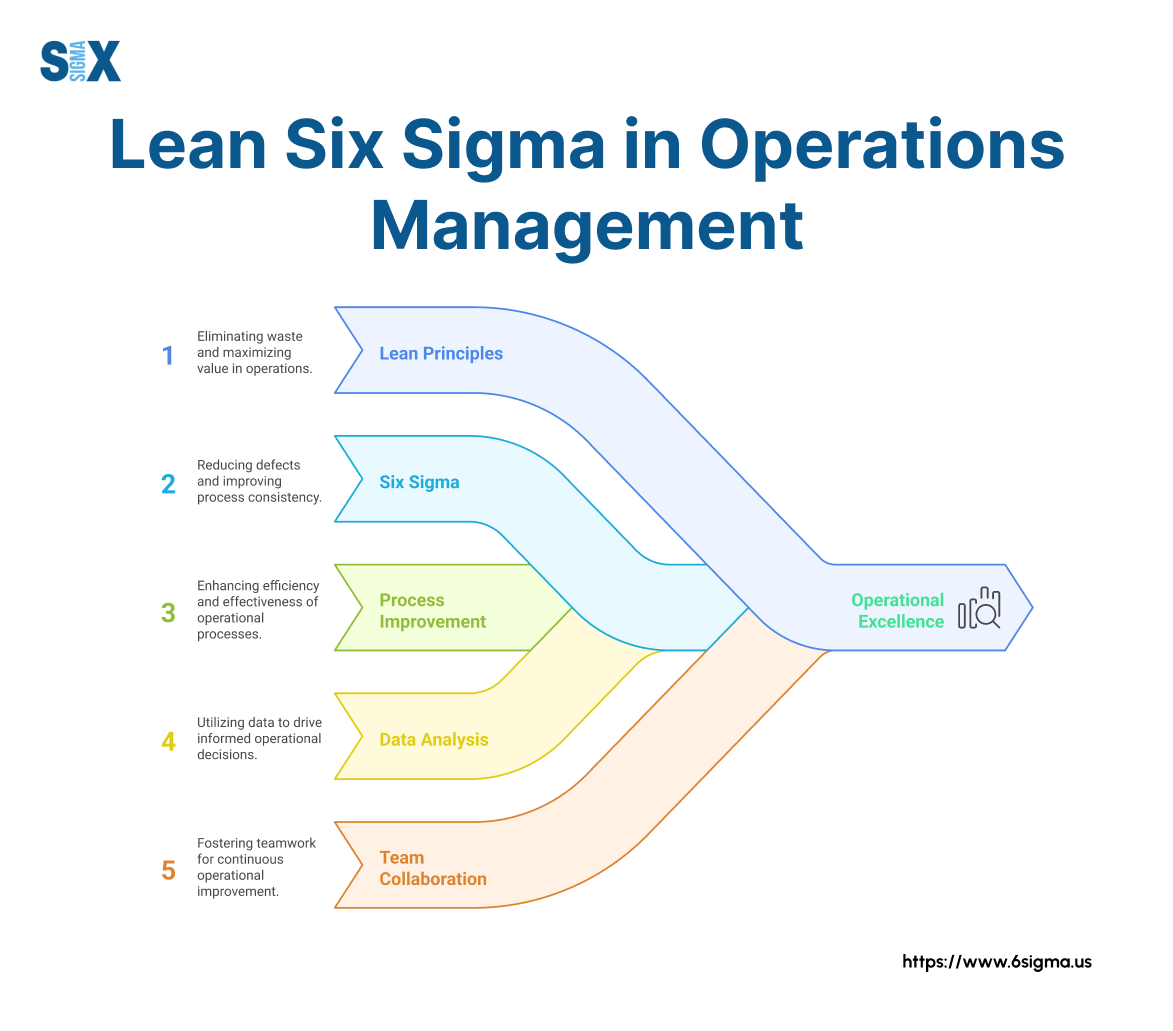
Ultimately, operational excellence will be the primary differentiator for small businesses in the coming decade. By committing to lean, you are building a resilient, agile, and highly profitable enterprise ready for whatever the future holds.
Frequently Asked Questions (FAQ)
What is the biggest benefit of lean operations for small businesses?
The biggest benefit is the ability to maximize customer value while minimizing waste. This leads to higher profit margins, improved customer satisfaction, and the ability to scale sustainably without proportionally increasing your overhead costs.
How long does it take to see results from lean management?
While deep cultural shifts take time, you can often see measurable operational improvements within 30 to 90 days. Quick wins, like reorganizing a workspace or automating a scheduling bottleneck, yield immediate time and cost savings.
Can lean principles be applied to service-based small businesses?
Absolutely. Lean is highly versatile and applies seamlessly to software development, healthcare, consulting, and retail. In service businesses, waste often looks like redundant emails, unnecessary meetings, or delayed client approvals.
What tools are essential for lean operations in 2026?
Essential tools include AI-powered CRM systems, predictive inventory management software, digital Kanban boards, and automated workflow platforms. These modern tools digitize and streamline traditional lean practices for the modern workforce.
How do I get my team on board with lean methodologies?
Involve them from day one. Ask your employees where they experience the most friction in their daily tasks, and use their feedback to drive your first Kaizen initiatives. When they see their ideas making their jobs easier, buy-in happens naturally.
Conclusion
Mastering lean operations for small business is the ultimate strategy for sustainable growth and profitability in 2026. As we’ve seen through the Apex Tech Repair case study, transforming your workflows isn't just about working harder; it’s about working smarter.
By identifying waste, empowering your team, and leveraging modern AI tools, you can build a highly efficient machine that delivers unparalleled value to your customers. Don't let operational bloat hold your business back. Start mapping your value stream today, embrace continuous improvement, and watch your small business achieve extraordinary, scalable success.
References
- LinkedIn — Mastering Lean Operations for Small Businesses, 2024
- Euromatech — How to Implement Lean Management In Small Businesses, 2026
- Joseph Mapue — How to Implement Lean Thinking Into Your Small Business Operation, 2024
- Velaction — 13 Ways to Apply Lean Principles to a Small Business, 2011
- Kris Lai — Lean Management Principles for Small Businesses, 2026
- Lean Enterprise Institute — Operations and Lean Workflows, 2025
- SixSigma.us — Lean Six Sigma in Operations Management: The Ultimate Guide, 2025